
The Weight of Will: Build a Home Gym You’ll Actually Use
At 6:15 on a Tuesday evening, a home gym has to justify its place.
The working day is over. Dinner needs sorting. You have enough time to train, provided getting started does not become another job.
This is the moment that matters when planning a home strength space. The photographs taken when the equipment first arrives will show how it looks. An ordinary weekday will tell you how well it works.
Can you walk in and begin? Can you reach the equipment you need? Can you finish without leaving the garage in disarray?
A useful home gym makes those answers straightforward. It gives physical effort a place in a busy life—and makes that place worth returning to.
Start With the Session, Then Choose the Setup
Before drawing a floor plan, picture a workout you would genuinely look forward to.
Perhaps you enjoy a focused strength session, followed by cable exercises. Perhaps trap-bar work is the part you would make time for, even during a busy week. You might also want the flexibility of bodyweight training without permanently filling the room.
These preferences give your equipment choices a purpose.
Write a short brief for your gym:
“I want a strength space for two weekday sessions and a longer weekend workout, while keeping the garage usable for storage.”
Now you have something practical to design around.
A weekday session calls for equipment that is accessible and straightforward to set up. A shared garage needs clear storage positions. A longer weekend session may need enough open floor to move between different exercises.
The question becomes more useful than “What can I fit?”
What will help me train the way I want to, in the time I actually have?
Build Around a Station That Supports Your Training
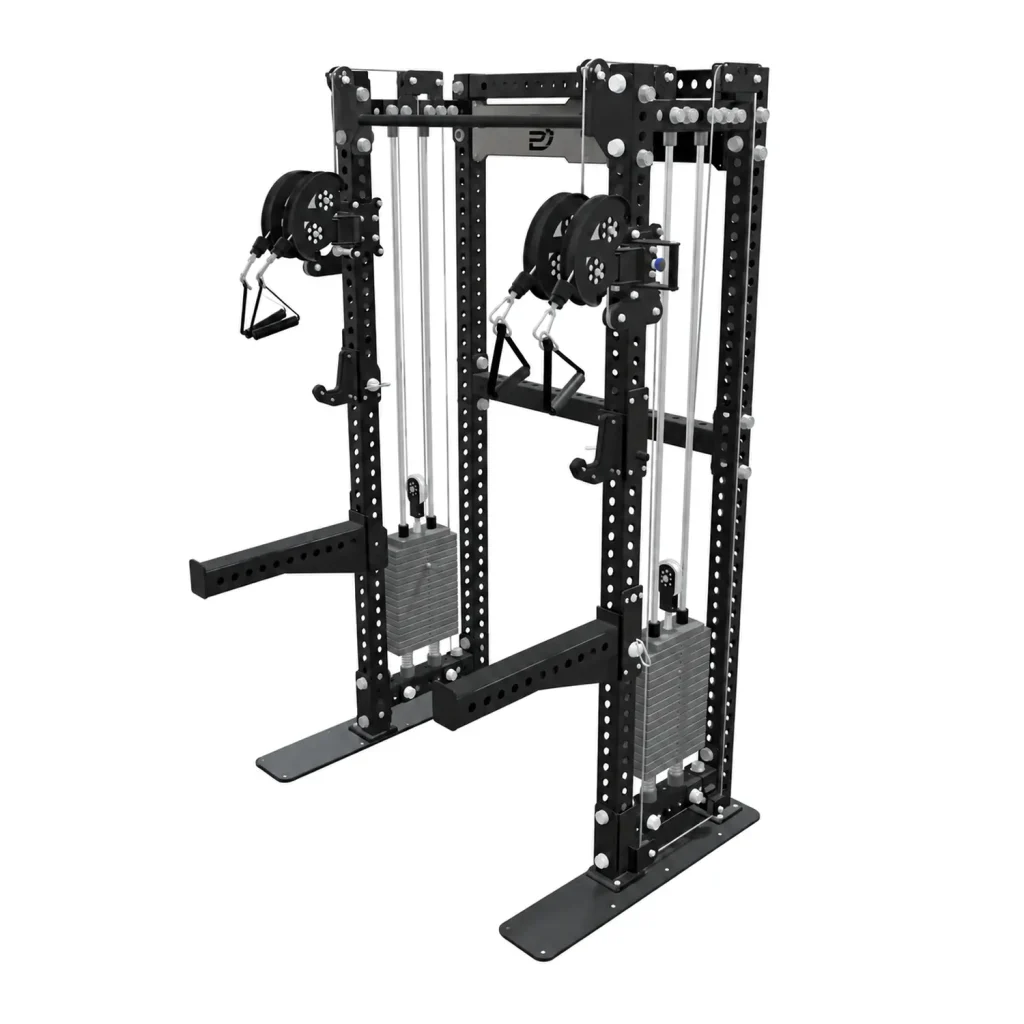
For a setup centred on strength and cable work, the DB-6022 Half Rack with Cable Machine brings several training options into one station.
It combines a rack, an integrated cable system and pec fly arms. Cable movements such as rows, lat pulldowns and triceps pushdowns give you ways to vary a session around the same main piece of equipment.
The practical attraction is having those options together. Your room can take shape around one main station, with supporting equipment positioned where it is useful.
That makes the DB-6022 a starting point to consider if rack and cable exercises feature regularly in your training. If they do not, let your own routine guide the layout rather than building around a machine simply because it looks impressive.
When planning its position, distinguish between the space the equipment occupies and the space you need to use it. Allow for your body position, cable movements, loading and access.
The rack may anchor the room, but the room still needs to work around you.
Give the Bench and Plates a Working Position—and a Home
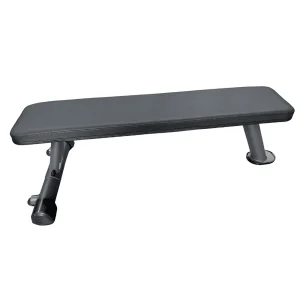
The Flat Bench DB-1001 adds a dedicated flat surface for suitable bench-based strength exercises. Its steel frame, padding and wide-foot base are relevant features for equipment that supports you throughout a movement.
Its position deserves as much thought as the rack.
A bench has two roles in a home gym: being ready when you need it, and being out of the way when you do not. Plan both. The place where it sits during an exercise may be different from where it belongs between sessions.
Apply the same thinking to your Commercial Plates.
Choose a combination that allows you to assemble the loads you use, including manageable changes between them. A useful plate selection is about the combinations available, not simply the total weight purchased.
Keep their storage near the loading area, with a clear route between the two. If putting plates away is awkward, they are more likely to remain on the floor.
Before ordering, check the complete equipment combination required for your intended exercises, including compatible bars, plates and accessories. This turns a group of individual purchases into a usable setup.
Protect the Open Floor
An empty section of floor can be one of the most valuable parts of a home gym.
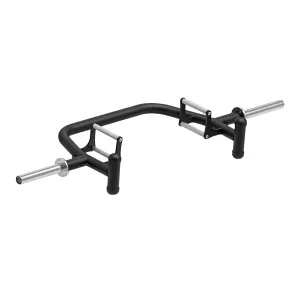
The DB Fitness Olympic Trap Bar 20kg gives that space a clear purpose if trap-bar training is part of your routine.
Its open frame allows straightforward entry and exit, while neutral handles place your hands beside your body. Integrated support feet provide a resting base, and the sleeves are designed for 50mm Olympic plates.
Plan for the full experience of using it: approaching the bar, taking position, loading plates and putting everything away. Keep room at both ends for loading. If carries are part of your intended use, account for the route as well.
This is where the temptation to add another machine deserves a pause. Equipment can fit within the room while taking away space that makes the rest of the gym enjoyable.
Before filling a gap, imagine your next session with that gap gone.
Sometimes the better upgrade is keeping it clear.
Add Flexibility Without Another Permanent Station
A home gym can offer variety without every training option occupying a fixed place.
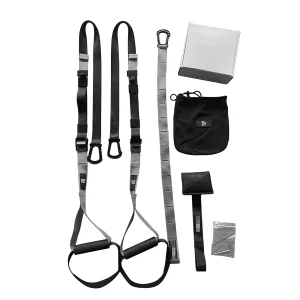
The Suspension Trainer includes adjustable straps, handles, a door anchor, an extension strap and a carrying pouch. It provides bodyweight exercise options such as rows, presses and assisted squats, then packs away between sessions.
That is useful in a garage that also serves the household.
It can support a separate bodyweight session or add another type of movement to your strength routine. Plan a suitable anchor and sufficient working space, following the installation instructions for your setup.
Its value comes from being available when wanted and easy to store afterwards.
The same principle can guide the whole room: permanent space for the equipment you use most, and flexible space for everything that does not need to stay out.
Put the Layout Through the Tuesday Test
Before committing to your floor plan, mark the proposed equipment positions with masking tape.
Then walk through a typical weekday session.
Enter the room carrying your water bottle. Move towards your first exercise. Imagine fetching plates, positioning the bench and changing to the next movement. Finally, walk through putting everything away.
Notice where the room slows you down.
Would you have to move a storage box before loading the bar? Does the bench block access to the plates? Would an open garage door interfere with the equipment? Can someone reach the house without crossing your working area?
Review five practical details:
- Movement space: enough room for the exercises, transitions and loading you intend to do.
- Overhead clearance: account for beams, lights and garage-door mechanisms.
- Floor suitability: choose a surface and protection appropriate for the equipment and loads.
- Access: keep entrances, exits and household routes clear.
- Comfort: plan lighting and ventilation for the times you will actually train.
For a New Zealand garage, picture a wet winter evening as well as a sunny morning with the door open.
A good layout should still make sense when the weather changes and time is short.
Make the Finish Part of the Plan
The end of a session deserves a little space too.
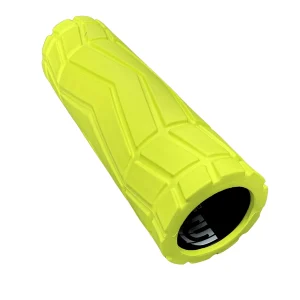
If foam rolling is part of your routine, the Yoga Foam Roller offers a compact option for self-massage. It is 33cm long and features two surface patterns, making it easy to store with smaller accessories.
You do not need a separate recovery room. You need enough clear floor to use it comfortably, without first shifting the bench or stepping around plates.
Then reset the space.
Return the weights. Put the bench in its storage position. Leave the area ready for the next session.
This is an easily overlooked part of home-gym design: how the room feels when you come back depends partly on how easy it was to leave it tidy.
Let Use Decide What Comes Next
Once your gym is working, give it time before expanding.
The first few weeks may reveal that the plates belong closer to the lifting area, or that the bench’s storage position interrupts your route. You may find that you use the cable system frequently and the suspension trainer on different days.
Those observations are more valuable than buying for an imagined future routine.
Before adding another item, ask:
- What do I regularly want to do that the current setup cannot support?
- Is equipment the missing piece, or would a layout change solve the problem?
- Where will the new item live during and after use?
- Will it improve the session enough to justify the space?
Your gym can develop as your training develops.
There is no need for every future possibility to occupy the garage today.
The Weight of Will
Technology can plan a session, suggest an exercise and record what happened afterwards.
There is still a moment when you have to begin.
You take your position. Set your grip. Give the movement your attention.
That directness is part of what makes a home strength space appealing. For a while, the task is tangible. The weight is in your hands, and the effort belongs to you.
A thoughtfully arranged room makes that moment easier to reach. The equipment is accessible. The floor is clear. You have somewhere to train without organising the rest of your evening around getting there.
Return to that Tuesday at 6:15.
The difference is that now, you know where to start.
The weight is physical. The will is yours.
Make room for your own strength space.